
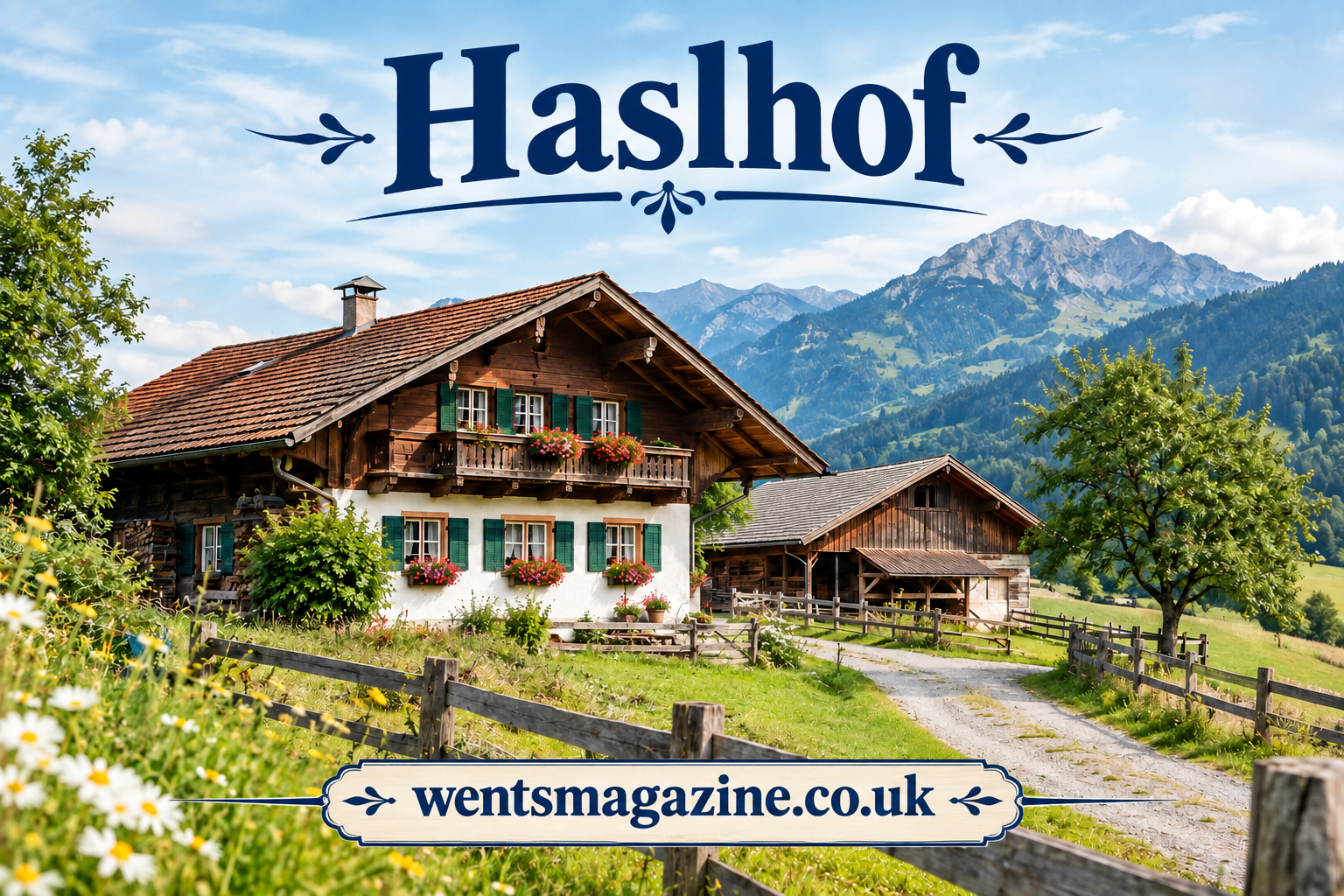
Haslhof is a name that may refer to a rural property, family estate, agricultural location, accommodation business, or a place connected with regional history and local traditions. Names ending in “hof” are commonly found in German-speaking areas and are often associated with farms, estates, courtyards, or established rural properties. However, the exact identity of Haslhof depends on the location and context in which the name is used. It may describe a working farm, a countryside residence, a guesthouse, or a historic property that has developed a role in the surrounding community. Understanding Haslhof requires looking beyond the name itself and examining its location, background, purpose, and relationship with the local area. For visitors, researchers, or people searching online, these details help create a clearer picture of what the place represents and why it may be relevant.
Understanding the Name Haslhof
The name Haslhof follows a naming pattern often found across Austria, Germany, and other German-speaking regions. The word “hof” generally relates to a farm, courtyard, estate, or rural property, while the first part of the name may be connected to a family name, local feature, historical reference, or traditional naming practice. Such names have often remained in use for generations, even when the original purpose of the property has changed.
A name like Haslhof may therefore carry both geographical and historical significance. It can identify a particular property while also reflecting the way rural settlements were traditionally organized. In many areas, farms were named according to their owners, landscape features, or local associations. Over time, these names became part of official maps, postal addresses, business identities, and regional records.
Because several places may share similar naming patterns, it is important to identify the exact Haslhof being discussed. Location, nearby towns, postal information, and the property’s current function are useful details when researching it.
Rural Properties and Their Historical Role
Rural properties such as Haslhof have traditionally played an important role in local economies. Farms and estates were often centers of agricultural production, family life, and community activity. They provided food, housed livestock, stored equipment, and supported the livelihoods of several generations.
In many European regions, rural properties were built to suit local weather conditions and agricultural needs. Buildings commonly included living quarters, barns, storage areas, workshops, and animal shelters. Their layout reflected the practical demands of farming and the available land.
Over time, some properties continued operating as farms, while others adapted to tourism, hospitality, education, or residential use. This transition is common in rural areas where traditional agriculture has changed due to modernization, economic pressures, and shifting land-use patterns.
If Haslhof is connected to a historic or working farm, its significance may be understood through this broader rural development.
The Agricultural Connection
The agricultural background of a property often explains its identity and importance. Farms traditionally depend on the surrounding land for crops, grazing, forestry, or livestock production. The type of agriculture varies according to altitude, climate, soil, and regional traditions.
A property named Haslhof may be associated with one or more of these activities, depending on its location. In mountain regions, livestock farming and hay production may be more practical than large-scale crop cultivation. In lower areas, farms may focus on grains, vegetables, fruit, or mixed agriculture.
Modern agricultural properties increasingly combine traditional practices with updated equipment and more efficient methods. Environmental management, water use, soil protection, and animal welfare have also become important parts of farm operations.
Understanding the agricultural role of Haslhof can help explain how the property fits into the local economy and landscape.
Architecture and Traditional Farm Design
Traditional farm architecture is another important part of understanding rural properties. Buildings in German-speaking regions often reflect local construction materials, weather conditions, and farming requirements. Wood, stone, plaster, and sloped roofs are common features in many rural areas.
The design of a farm was usually practical rather than decorative. Storage spaces were positioned according to seasonal needs, while living areas were arranged to support family life and daily work. In colder regions, buildings were often designed to provide insulation and protection from snow and wind.
If Haslhof is an older property, its architecture may provide clues about its age, regional style, and original purpose. Renovations may have introduced modern facilities while retaining important traditional features.
Preserving historic rural architecture can help maintain the character of a region and provide insight into how earlier generations lived and worked.
Haslhof and the Local Community
Rural properties are often closely connected to their surrounding communities. Even when a farm operates privately, it may contribute to the local economy through employment, purchasing supplies, maintaining land, or supporting regional businesses.
Some rural estates also participate in local events, agricultural markets, seasonal festivals, or educational programs. These activities help connect traditional properties with modern community life.
A place such as Haslhof may also be recognized by local residents because of its history, location, or family ownership. In rural areas, property names can be more familiar than formal street addresses, especially when they have been used for generations.
The relationship between a property and its community often determines whether it remains an active part of local identity.
Tourism and Rural Hospitality
Many rural properties have expanded into tourism as farming alone becomes less financially reliable. Guest rooms, holiday apartments, farm stays, restaurants, and outdoor activities can provide additional income while allowing visitors to experience the countryside.
If Haslhof operates as a hospitality destination, visitors may be interested in its accommodation, location, surroundings, facilities, and activities. Rural stays often appeal to people seeking a quieter environment away from busy urban areas.
The appeal of countryside accommodation is usually based on practical experiences such as walking trails, local food, farm activities, mountain views, and access to nearby attractions. However, visitors should confirm current facilities and services before making plans because rural businesses can change their offerings seasonally.
Local Food and Regional Traditions
Food is often closely connected with rural properties and agricultural history. Farms may produce milk, cheese, eggs, meat, vegetables, fruit, herbs, or other local products. Even when a property no longer operates as a full-time farm, it may retain links to regional food traditions.
Local food production can support nearby businesses and help preserve traditional methods. Visitors may be interested in learning where products come from and how they are made. In some regions, farm shops and direct sales provide an important connection between producers and consumers.
If Haslhof is involved in food production or hospitality, its relationship with regional cuisine may be an important part of its identity. However, specific products should be confirmed through reliable information rather than assumed from the name alone.
The Importance of Location
Location is one of the most important factors when researching Haslhof. A rural property’s surroundings influence its climate, activities, accessibility, architecture, and economic role. A Haslhof located in a mountain region may have a very different character from one situated near a town or agricultural plain.
Visitors and researchers should identify the nearest municipality, region, and country before drawing conclusions. Nearby roads, public transport, hiking routes, and local attractions can also help establish the property’s practical significance.
Location information is particularly important because similar names may exist in different areas. A search for Haslhof without geographical details may produce several unrelated results.
Environmental Management and Sustainability
Modern rural properties increasingly face questions about sustainability and environmental responsibility. Agricultural land must be managed carefully to protect soil, water, biodiversity, and surrounding ecosystems.
Sustainable practices may include efficient water use, responsible fertilizer application, renewable energy, recycling, habitat protection, and maintaining natural landscape features. Farms may also use traditional methods that support soil health and reduce environmental impact.
If Haslhof remains an active agricultural property, its environmental practices may influence its long-term viability. Rural businesses that combine farming with tourism must also balance visitor needs with the protection of the surrounding landscape.
Efficient resource use can reduce costs and help rural properties remain operational over time.
Researching Haslhof Online
People searching for Haslhof should begin by identifying the exact location or purpose of the property. Official websites, regional tourism pages, municipal records, agricultural directories, and reputable local publications may provide useful information.
Important details to verify include the property’s address, ownership or business identity, services, opening times, accommodation options, and current activities. Users should also check whether information is recent, particularly if they are planning a visit.
Online maps and travel platforms may help confirm the location, but they should not always be treated as the final authority. Business details can become outdated, and similarly named properties may appear in search results.
A careful research process helps prevent confusion and ensures that visitors are looking at the correct Haslhof.
Visiting a Rural Property
Anyone planning to visit Haslhof should consider practical arrangements in advance. Rural locations may have limited public transport, narrow roads, seasonal access restrictions, or fewer nearby services than urban destinations.
Visitors should check directions, parking arrangements, opening hours, booking requirements, and whether the property is open to the public. If it is a working farm, certain areas may be restricted for safety reasons.
Respecting private property and local routines is also important. Rural businesses often combine personal residence, agricultural work, and visitor services in the same location. Clear communication and advance planning can make visits more comfortable for both guests and operators.
Challenges Facing Traditional Rural Properties
Rural properties face several challenges, including rising operating costs, changing agricultural markets, labor shortages, weather-related risks, and the need for modernization. Maintaining older buildings can also be expensive, especially when traditional structures require specialist repairs.
Some properties respond by diversifying their activities. They may combine agriculture with tourism, direct sales, education, events, or renewable energy projects. This approach can create additional income while preserving the property’s original identity.
However, diversification must be managed carefully. Too many commercial activities can change the character of a rural property or place pressure on local infrastructure. The balance between tradition and modernization is an important issue for properties such as Haslhof.
Preserving Rural Heritage
Rural heritage includes more than old buildings. It also involves farming methods, family histories, local names, food traditions, landscape management, and community relationships. Properties that preserve these elements contribute to the cultural identity of their region.
Haslhof may be valuable not only because of its current use but also because of the history associated with its name and location. Even a modest rural property can provide insight into regional development and traditional ways of life.
Preservation does not always mean keeping everything unchanged. In many cases, adapting historic buildings for modern use is the best way to ensure that they survive. The challenge is to introduce necessary improvements without removing the features that make the property distinctive.
Why Haslhof May Interest Visitors and Researchers
Haslhof may attract different types of interest depending on its exact identity. Tourists may be interested in accommodation or countryside experiences, while researchers may focus on its name, history, architecture, or agricultural background. Local residents may view it as part of the area’s established identity.
The combination of place, history, and practical use makes rural properties worth examining. They often show how traditional landscapes adapt to modern economic and social conditions.
For visitors, the main value may be the opportunity to experience a rural setting. For researchers, the property may offer clues about settlement patterns, language, agriculture, and regional development.
Conclusion
Haslhof is a name that may identify a rural property, farm, estate, guesthouse, or location connected with German-speaking regional traditions. Its exact meaning and significance depend on the specific place being discussed. Understanding it requires attention to location, history, architecture, agricultural activity, and current use.
Rural properties such as Haslhof often represent more than a physical building. They can reflect generations of farming, local community connections, traditional architecture, and changes in the rural economy. Some continue their original agricultural role, while others adapt through tourism, hospitality, or new business activities.
Anyone researching or planning to visit Haslhof should confirm the exact location and obtain current information from reliable sources. By examining the property in its wider regional context, readers can better understand its practical purpose and cultural importance. Whether viewed as a working farm, historic estate, or rural destination, Haslhof illustrates how place names and countryside properties continue to connect people with local history and everyday life.