
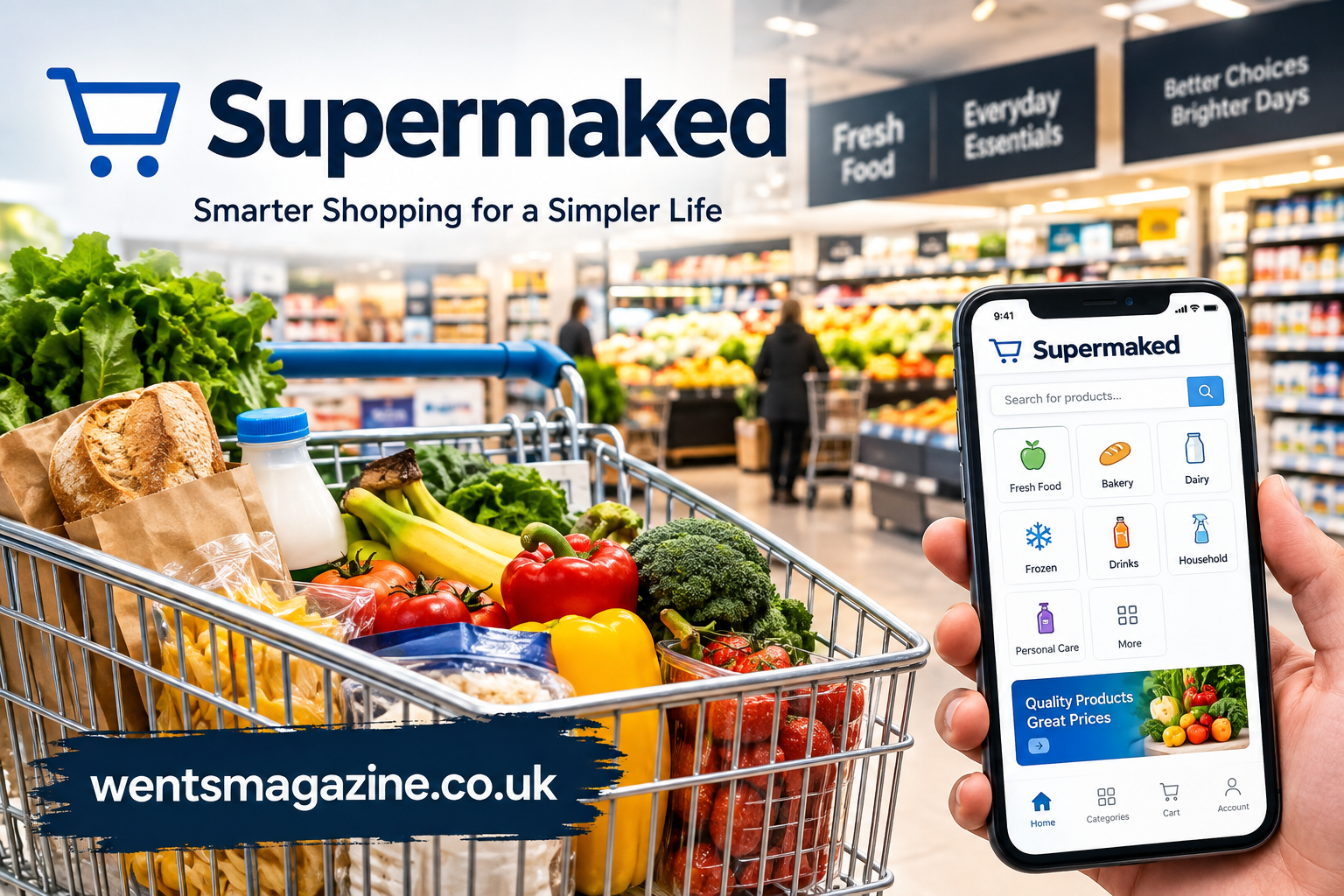
Supermaked is a term that may refer to a supermarket-related concept, service, platform, brand, or digital project, depending on the context in which it is used. At its core, the idea is connected with the way people discover, organise, compare, or purchase everyday products. Supermarket-related systems have changed significantly as consumers have gained more ways to find products, check prices, place orders, and manage shopping from different channels. A term such as Supermaked can therefore be examined through the broader relationship between retail, technology, product information, and customer convenience. Understanding what Supermaked represents requires looking at its purpose, possible applications, user experience, product organisation, and role within modern retail practices rather than focusing only on the name.
What Is Supermaked?
Supermaked can be understood as a term associated with supermarket shopping and retail services. The spelling itself may be intentional, or it may be used as a variation of the word “supermarket.” Because the term can appear in different online contexts, its exact meaning depends on the website, business, application, or service using it.
In a retail context, a supermarket provides customers with access to a broad range of products in one place. These commonly include groceries, household supplies, personal-care items, packaged foods, beverages, and other everyday goods. Digital platforms have expanded this model by allowing customers to browse products without physically visiting a store.
A platform or service identified as Supermaked could therefore involve product discovery, online shopping, retail information, price comparison, store information, or another supermarket-related function. The important point is that the term should be considered in relation to its actual use rather than assuming that it represents one specific business model.
How Supermarket Shopping Has Changed
Traditional supermarket shopping required customers to travel to a store, locate products on shelves, compare available options, and complete a purchase at a checkout. This process remains common, but digital tools have added several alternatives.
Online grocery services allow shoppers to search for products by name or category. Digital shopping lists can help customers organise purchases before visiting a store. Mobile applications can provide product information, offers, order tracking, and delivery updates. These tools have changed the role of product information because customers can now make decisions before reaching a physical shelf.
Supermaked, when considered within this environment, represents a concept that can be linked to the wider movement toward more organised and accessible retail experiences. The value of such a system depends on how effectively it helps users complete practical shopping tasks.
Product Categories and Organisation
Good organisation is an important part of any supermarket system. A store with thousands of products needs a clear structure so that customers can locate what they need without unnecessary effort.
Common categories include fresh food, bakery products, dairy, frozen food, meat and fish, snacks, drinks, household cleaning products, toiletries, and personal-care items. Online systems often use similar categories, with additional filters for price, brand, dietary requirements, size, availability, and other characteristics.
For a platform connected with the Supermaked concept, clear categorisation would be particularly important. Customers should be able to understand where a product belongs and move between related categories easily. Search functions should also provide relevant results when users enter product names or general terms.
Accurate product descriptions are equally important. Information such as quantity, ingredients, packaging size, storage instructions, and pricing can influence a purchasing decision. Missing or unclear information can create confusion and reduce confidence.
The Role of Technology
Technology has become closely connected with supermarket operations. Retailers use computer systems to manage inventory, process payments, monitor sales, organise deliveries, and analyse purchasing patterns.
Barcode systems make it possible to identify products quickly during checkout. Inventory software helps businesses track stock levels and identify products that may need replenishment. Online ordering systems connect customers with available products and can coordinate delivery or collection.
A digital service associated with Supermaked could use similar technologies to make information easier to access. The usefulness of such technology does not come simply from being digital. It comes from solving practical problems for customers and retailers.
For example, a customer benefits from an accurate stock indicator because it reduces the chance of ordering an unavailable product. A retailer benefits from better inventory information because it can reduce waste and improve stock planning.
User Experience
User experience is another important factor in supermarket-related services. Customers generally expect shopping systems to be straightforward. They need to find products, understand prices, review their selections, and complete purchases without unnecessary complications.
A useful interface should provide clear navigation and readable information. Product images can help customers identify items, while descriptions provide additional details. Search tools should work with common product names and allow users to narrow results when many products are available.
For mobile users, the design must also work effectively on smaller screens. Buttons, menus, product information, and checkout functions need to remain easy to use.
If Supermaked is being used as the name of a digital retail service, these basic usability principles would be central to its effectiveness. A service can offer many features, but those features have limited value if customers struggle to use them.
Pricing and Product Comparison
Price is one of the most important considerations when people buy everyday goods. Supermarkets often stock several versions of similar products, allowing customers to compare brands, quantities, and prices.
Digital platforms can make this comparison easier by displaying relevant information in a consistent format. Customers may be able to compare unit prices, pack sizes, or different brands before deciding what to buy.
Unit pricing is particularly useful because the largest package is not always the cheapest option when the cost is calculated per kilogram, litre, or individual item. Clear pricing information allows customers to make more informed decisions.
Any supermarket-related platform must also keep pricing information accurate. If an advertised price does not match the amount charged at checkout, customer trust can be affected.
Convenience and Shopping Planning
Convenience is a major reason people use digital shopping tools. Instead of walking through every aisle, customers can search for specific products and add them to a shopping list or online basket.
Shopping lists can also reduce forgotten purchases. A customer planning meals for several days can organise required ingredients in advance and check what is already available at home.
Services connected with Supermaked could potentially support this type of planning through searchable product catalogues, saved lists, favourites, or order histories. These functions are useful because they address common shopping tasks rather than adding unnecessary complexity.
However, convenience should not come at the expense of accurate information. A fast ordering process is less useful when stock, product details, or delivery information is unreliable.
Supermaked and Retail Businesses
Supermarket operations involve more than selling products to customers. Retail businesses must manage suppliers, storage, inventory, staff, transportation, payments, and customer service.
Digital systems can connect several of these activities. Sales information can help businesses understand which products are in demand. Inventory records can support purchasing decisions. Online orders can provide information about customer preferences and delivery requirements.
For smaller retailers, technology can also provide tools that were previously available mainly to larger chains. However, implementation requires investment, training, maintenance, and attention to data security.
A supermarket-related service should therefore be evaluated not only from the customer perspective but also from the operational side. The best systems provide useful information while fitting into existing retail processes.
Customer Trust and Information Accuracy
Trust is essential in retail. Customers need confidence that products are represented accurately and that prices, availability, and order information are reliable.
Product descriptions should not make claims that cannot be supported. Images should represent the actual product as closely as possible. If an item is substituted because it is unavailable, customers should receive clear information about the replacement.
Data protection is also important for digital shopping services. Online accounts may contain names, addresses, payment information, order histories, and other personal details. Businesses must use appropriate security measures to protect this information.
For any platform operating under the Supermaked name, transparency would therefore be an important part of building and maintaining user confidence.
Challenges Associated With Digital Supermarket Services
Digital supermarket services face several practical challenges. Stock availability can change quickly, particularly for fresh products and items that experience high demand. Delivery systems can also be affected by traffic, weather, staffing, or high order volumes.
Another challenge is product substitution. If a customer orders one product and it becomes unavailable, the replacement may not meet the customer’s requirements. Clear substitution policies can help reduce disagreements.
There is also a difference between digital and physical shopping. In a store, customers can inspect packaging, compare products directly, and choose fresh items themselves. Online services need to provide enough information to compensate for the absence of direct physical inspection.
These issues show why technology alone cannot solve every retail problem. Successful supermarket services need reliable operations behind the digital interface.
Future Development
The development of supermarket services is likely to continue around better inventory management, faster ordering, improved product information, and more connected shopping experiences.
Artificial intelligence and data analysis can help businesses forecast demand and identify purchasing patterns. Automated stock systems may improve replenishment. Delivery technology can help retailers coordinate larger numbers of orders.
For customers, improvements are most useful when they make shopping clearer and more predictable. Better search, accurate stock information, transparent pricing, and reliable delivery updates are practical examples.
If Supermaked develops as a recognised platform or retail concept, its long-term usefulness will depend on how effectively it addresses these needs.
Conclusion
Supermaked is a term that can be examined through the wider relationship between supermarket retail, digital technology, product information, and customer convenience. Its exact meaning depends on the context in which the name is used, but the underlying subject connects with important aspects of modern shopping.
Effective supermarket services depend on clear product organisation, accurate pricing, reliable stock information, simple navigation, secure transactions, and responsive customer support. Technology can make these processes more efficient, but the quality of the service ultimately depends on how well the technology is implemented.
For customers, the most useful supermarket systems are those that save time while providing dependable information. For retailers, the challenge is to combine digital convenience with strong inventory, supply, and customer-service operations. These principles provide a practical framework for understanding Supermaked and its place within the broader retail environment.