
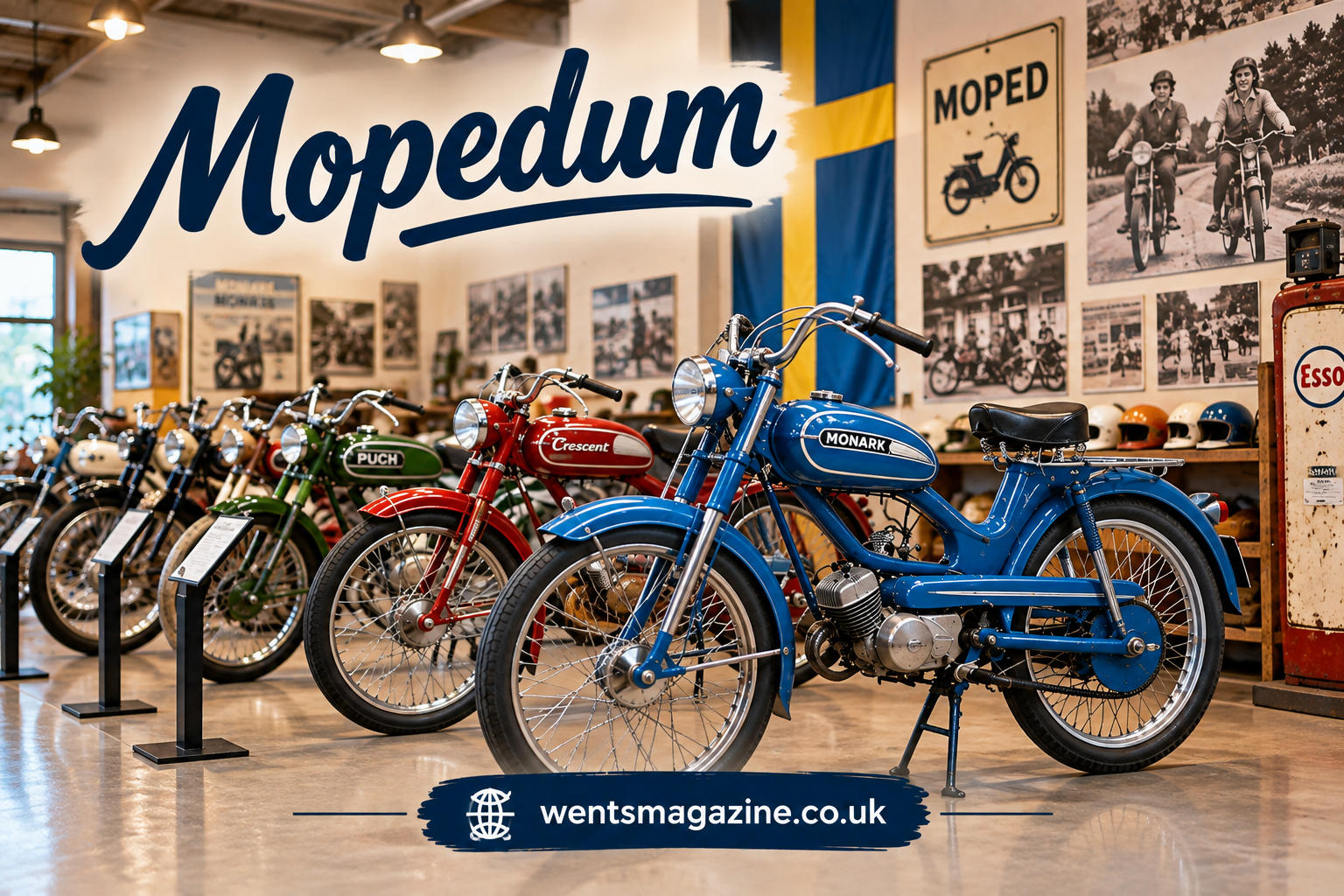
Mopedum is a name associated with vintage mopeds, Swedish transport history, and nostalgia for the period when small motorised two-wheelers became an important part of everyday life. The name is particularly connected with Mopedum in Sweden, a museum and online resource focused on veteran mopeds, classic models, and the cultural history surrounding them. Its subject is not only the machines themselves but also the people, lifestyles, and social changes connected to moped ownership.
Mopeds are often viewed as simple vehicles, but their history covers engineering, manufacturing, youth culture, commuting, design, and changing transport needs. Mopedum provides a way to explore this history through older mopeds, historical information, collections, and stories about the period when these vehicles became common across Swedish towns and rural communities.
What Is Mopedum?
Mopedum is connected with the preservation and presentation of veteran mopeds and the history surrounding them. The Swedish project is commonly described as a nostalgia museum focused on mopeds from earlier decades, especially the years between the 1950s and 1970s.
The museum’s identity is built around classic mopeds rather than modern motorcycles or high-performance vehicles. Its purpose is to show how mopeds developed and how they were used by ordinary people. The displays and related material connect the machines with everyday settings, including shops, petrol stations, homes, clothing, and transport habits from earlier periods.
Mopedum’s online presence also includes articles about vintage mopeds, their history, maintenance, buying considerations, and well-known Swedish manufacturers. This makes it useful not only for collectors but also for readers who want a general introduction to the subject.
The name combines the word “moped” with the ending “-um,” giving it the sound of a museum or exhibition space. In practice, it functions as a name for a dedicated moped-history project.
The Historical Importance of Mopeds
To understand Mopedum, it is useful to understand why mopeds became important in the first place.
A moped is a small two-wheeled vehicle with a low-powered engine. Traditional models often included pedals, allowing the rider to use them like a bicycle when necessary. Dictionaries describe mopeds as smaller and less powerful than motorcycles, designed for low-speed travel and practical everyday transport.
The word “moped” comes from a combination of terms connected with motor power and pedals. The modern concept developed from experiments involving bicycles fitted with small engines. Over time, manufacturers created more reliable designs that were easier to operate and cheaper to maintain than motorcycles or cars.
After the Second World War, Europe experienced strong demand for affordable transport. Many families could not afford a car, while public transport was not always convenient, especially in rural areas. Mopeds offered a practical alternative. They were economical, relatively easy to repair, and suitable for short journeys.
In Sweden, mopeds became particularly common during the middle of the twentieth century. They were used by students, workers, farmers, shopkeepers, and young people travelling between towns and villages.
Mopedum and Sweden’s Moped Culture
Sweden has a strong connection with moped manufacturing and moped ownership. Companies such as Monark and Husqvarna played important roles in producing motorcycles, bicycles, and mopeds for the domestic market.
During the 1950s, 1960s, and 1970s, mopeds were a familiar part of Swedish streets. Teenagers often used them as their first form of independent transport. A moped made it possible to visit friends, attend activities, travel to work, or reach nearby towns without depending on parents or buses.
For many people, owning a moped was connected with growing independence. It was often the first vehicle a young person could operate and maintain. Learning to repair a carburettor, adjust brakes, replace cables, or clean a spark plug was part of the experience.
Mopedum preserves this social side of moped history. The vehicles represent more than mechanical objects. They are connected with memories of school years, first journeys, summer travel, local gatherings, and changing ideas about freedom.
The Golden Age of the Moped
The period from the 1950s through the 1970s is often considered the golden age of the moped. During these decades, manufacturers produced many different designs for different customers.
Some models were built for practical commuting. Others focused on appearance, comfort, or a more motorcycle-like shape. There were step-through mopeds, lightweight models, sport-style mopeds, and utility versions designed for everyday use.
The design of a moped often reflected the period in which it was made. Earlier models tended to have simple frames, metal components, basic lighting, and straightforward mechanical systems. Later models included more developed suspension, improved braking systems, larger seats, and more distinctive styling.
Mopedum’s historical focus on the years from approximately 1952 to 1979 reflects this important period. The museum material presents the development of the moped alongside broader social changes in Sweden, including changes in transport, consumer culture, and youth identity.
What Visitors Can Learn from Mopedum
A visit to a moped museum is not only about looking at old vehicles. It can help visitors understand how people travelled and lived during earlier decades.
A typical historical moped display may provide information about:
- The manufacturer and model
- The year of production
- Engine size and mechanical design
- The country where it was produced
- Its intended purpose
- Its role in Swedish transport history
- Changes in design over time
- Restoration methods and original components
Mopedum’s broader presentation also connects mopeds with period environments. Historical exhibitions have included settings inspired by old shops, petrol stations, homes, and everyday Swedish life. These details help explain how mopeds fitted into society rather than presenting them as isolated machines.
For younger visitors, the displays can provide a practical introduction to older mechanical technology. For older visitors, they may bring back memories of vehicles they once owned or saw in their local communities.
Veteran Mopeds as Collectibles
Today, veteran mopeds are collected for several reasons. Some owners are interested in mechanical engineering, while others value the historical connection. A classic moped may also be purchased as a restoration project.
Collectors usually consider several factors before buying a vintage model:
Originality
A moped with original parts, paint, badges, and fittings may be more valuable to collectors than one that has been heavily modified. However, originality is not always essential if the purpose is simply to enjoy riding or restoring the machine.
Condition
The condition of the frame, engine, wheels, fuel tank, and electrical system can strongly affect the amount of work required. Rust, missing parts, and damaged wiring may create additional restoration costs.
Availability of Parts
Some classic mopeds are easier to restore because replacement parts remain available. Others require specialist suppliers, used components, or custom repairs.
Documentation
Original manuals, registration documents, service records, and historical photographs can add value. They may also help establish the correct specifications of a particular model.
Mechanical Simplicity
Many older mopeds are relatively simple compared with modern vehicles. This makes them attractive to people who enjoy hands-on maintenance and learning mechanical skills.
Mopedum’s subject matter is useful for collectors because it provides historical context before a purchase. Understanding a model’s background can help buyers avoid treating every old moped as identical.
The Role of Restoration
Restoration is a major part of veteran-moped culture. Some owners aim to return a machine to its original factory condition, while others prefer a practical renovation that makes it safe and reliable to ride.
A full restoration may involve:
- Cleaning or rebuilding the engine
- Replacing worn seals and bearings
- Repairing the fuel system
- Restoring the frame
- Repainting metal panels
- Replacing cables and brake components
- Repairing lights and wiring
- Finding original badges and fittings
- Rebuilding wheels and tyres
Restoration requires patience because older mopeds may have been modified by several previous owners. A machine that appears complete may still contain non-original parts or improvised repairs.
Historical resources such as Mopedum can help enthusiasts identify correct components and understand how different models were originally built. This is especially important when restoring rare or less-documented mopeds.
Mopedum’s Educational Value
One of the most useful aspects of a project like Mopedum is its educational role. Many people know what a moped is but have little understanding of its development.
A museum or historical website can explain:
- Why mopeds became popular
- How small engines evolved
- Why certain designs were used
- How manufacturers competed
- What legal rules affected moped construction
- How mopeds influenced youth culture
- Why some models became collectable
- How transport habits changed over time
The subject also introduces visitors to basic mechanical concepts. Older mopeds often use systems that are easier to observe than those found in modern vehicles. Visitors can see how fuel, air, ignition, gearing, braking, and mechanical drive systems work together.
This makes veteran mopeds useful for informal technical education, especially for people interested in engineering, restoration, or transport history.
Mopedum Compared with Modern Transport
Modern scooters, electric bikes, and electric mopeds are generally more advanced than the machines displayed in vintage collections. They may include electronic controls, improved batteries, digital displays, modern safety equipment, and more efficient motors.
Older mopeds, by comparison, were designed around mechanical simplicity and low manufacturing costs. Their engines were usually small, their speed was limited, and their systems could often be repaired without specialist electronic equipment.
The comparison shows how transport technology has changed. Modern vehicles focus on efficiency, emissions, convenience, and safety. Vintage mopeds reflect a period when affordability, durability, and ease of repair were often the main priorities.
Modern vehicles are generally more suitable for regular transport, while classic mopeds offer historical value and a different type of ownership experience.
Why Vintage Mopeds Still Attract Interest
The continued interest in vintage mopeds is not based only on nostalgia. Several practical and cultural reasons explain their popularity.
First, they have recognizable designs that differ from modern mass-produced vehicles. Second, many are mechanically accessible, allowing owners to work on them without advanced equipment. Third, they provide a connection to local history.
Classic mopeds also have a strong social aspect. Owners often join clubs, attend rallies, exchange parts, share restoration advice, and display their vehicles at local events. These communities help preserve knowledge that might otherwise disappear.
For some people, a vintage moped is a family connection. A person may restore a model once owned by a parent or grandparent. In that situation, the vehicle becomes a physical link between generations.
Buying a Veteran Moped
Anyone considering buying a classic moped should inspect it carefully rather than focusing only on its appearance.
Important checks include:
- Whether the frame is straight and structurally sound
- Whether the engine turns freely
- Whether the fuel tank is rusted
- Whether the brakes work properly
- Whether replacement parts are available
- Whether the tyres need replacement
- Whether the vehicle has been modified
- Whether documents and identification numbers are present
- Whether the asking price reflects the restoration work required
A cheap moped may become expensive if it needs a complete engine rebuild, electrical replacement, repainting, and hard-to-find components.
It is also important to check local legal requirements. Registration, insurance, licensing, roadworthiness, and equipment rules differ between countries and may depend on the vehicle’s age and engine specifications.
Preserving Transport History
Mopedum represents an effort to preserve a part of transport history that can easily be overlooked. Large vehicles such as cars, trains, and aircraft often receive extensive historical attention, while small everyday vehicles are sometimes ignored.
Mopeds deserve attention because they affected ordinary life on a large scale. They helped people travel to work, attend school, visit relatives, and participate in social activities. They were affordable enough to reach people who could not own cars.
Preserving these vehicles also preserves information about manufacturing, design, fuel use, repair practices, and social habits. A moped can tell visitors as much about its period as furniture, clothing, advertisements, or household equipment.
Final Thoughts
Mopedum is closely associated with the history of Swedish veteran mopeds and the culture that developed around them. Its focus includes classic machines, historical development, restoration, collecting, and the everyday experiences connected with moped ownership.
The importance of Mopedum lies in its ability to present mopeds as both mechanical objects and cultural records. These vehicles helped generations of people gain independence and affordable mobility. They also played a role in Swedish manufacturing and youth culture during the middle decades of the twentieth century.
For collectors, Mopedum offers historical context. For restoration enthusiasts, it provides inspiration and background. For general visitors, it offers an accessible way to understand how a small vehicle influenced everyday life.
Although modern transport has changed significantly, vintage mopeds remain relevant because they represent practical engineering, local history, and personal memories. Mopedum helps keep that part of the past available for future generations.